Fatherhood and paternal love
The Death of Bunny MunroFatherhood and paternal love are presented through a sharp conflict between inheritance and care. Bunny has learned to equate manhood with sexual confidence, salesmanship, and dominance, and at first tries to pass that script to Bunny Junior. Yet the story ends not with the boy mastering his father’s trade, but with Bunny placing him at the controls of a small train and the child remaining beside him as he dies. Their final closeness is real, but it arrives after the father’s failures have already shaped the journey.
A Father’s Inherited Script
Bunny’s fatherhood begins inside a model of masculinity built around mastery: mastery of women, of a sales pitch, and of the son expected to inherit the business. In a breakfast room, Bunny treats a waitress’s decision whether to turn back as if it were already settled by his own sexual magnetism. The moment exposes the entitlement that shadows his relationships. It also matters to his fatherhood because Bunny’s confidence in his power to determine other people’s choices sits uneasily beside the care and responsibility a parent owes a child.
The inherited pattern appears more directly in Bunny’s response to Poodle. When Poodle makes a contemptuous remark about Bunny’s father, Bunny threatens to slap him. His sudden seriousness shows that his attachment to his father survives resentment and embarrassment; the old man remains a figure whose dignity Bunny will defend. But loyalty does not mean that Bunny has escaped his father’s influence. The older man’s belief that a boy should be taught the business has become one of the few explicit templates Bunny can offer his own son.
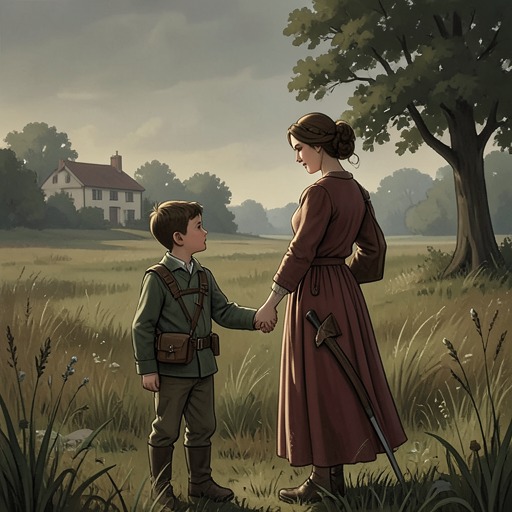
That template is conveyed through a lesson about a large oak or elm tree. Bunny asks Bunny Junior to imagine shaking its thick trunk, with roots deep in the soil and branches above, and invites him to consider what follows. The parable makes the father sound like a teacher transmitting knowledge about strength and consequence. Bunny Junior listens closely, even while admitting that he does not yet understand. His attention gives the scene warmth, but also establishes an asymmetry: Bunny speaks as though wisdom has been handed down to him, while the boy must wait to discover what the lesson means.
Training the Son
On the sales trip, Bunny turns fatherhood into a choice framed on his own terms. At the Wellborne Estate in Portslade, he drives slowly through the shadowed courtyards while consulting the customer list Geoffrey has provided. The practical setting makes the lesson immediate: this is not an abstract conversation about the future but a working sales route on which Bunny expects his son to learn the trade.
Bunny presses Bunny Junior to choose between staying with his father and returning to school. He presents the decision as a test of ambition and warns that the boy will amount to little if he does not learn the business. The pressure is especially revealing because Bunny Junior is squinting and says that the light hurts his swollen eyes; he fears he may be going blind and asks about eye drops. Bunny insists on an answer instead of attending to that distress. In this exchange, his conception of paternal care is compromised by his need for the boy to affirm Bunny’s own priorities. The son is asked to become a companion and apprentice before his immediate vulnerability has been addressed.
Bunny’s father later voices a harsher version of the same inheritance. Angry and ill, the old man threatens Bunny’s mother-in-law and then reproaches Bunny for failing to follow his instruction in the business, contrasting his teaching with Bunny’s work selling toilet brushes. The scene reveals the narrow terms on which the older generation measures success. Bunny’s earlier defense of his father against Poodle and his later rebuke of that father’s conduct coexist: affection and inherited damage are not mutually exclusive.
A Public Claim of Responsibility
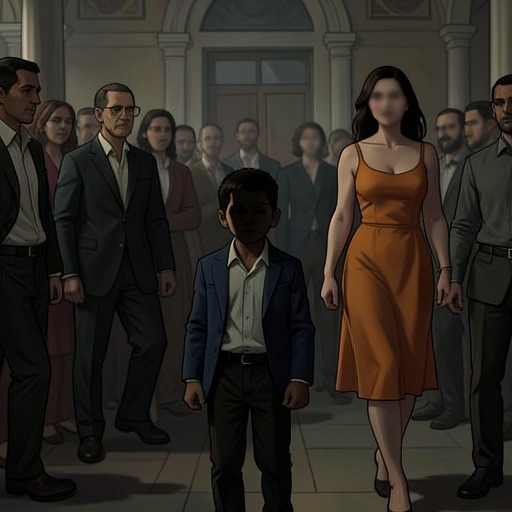
At Butlin’s Holiday Camp, Bunny’s account of fatherhood changes from instruction to responsibility. During his public appeal, the crowd initially rejects him, and familiar antagonists—Mushroom Dave, Charlotte Parnovar, River, and Mrs Pennington—add to the hostility. Bunny persists. He acknowledges that he cannot reverse what he has done and asks for help in changing the direction of his life, identifying his son’s well-being as his highest concern.
The change in the crowd is tied specifically to Bunny’s declaration of love for his nine-year-old son. Someone calls for the people to let him speak, and their anger gradually gives way to sympathy. The moment does not establish that Bunny has repaired the damage or that the public absolves him of every act. Instead, it makes paternal responsibility the ground on which he asks to be heard: he cannot undo the past, but he presents care for Bunny Junior as a reason to seek a different future. The appeal is a claim made in public, under pressure, rather than proof that the consequences of his earlier choices have disappeared.
The Final Journey
After the crowd, Bunny sees Bunny Junior waiting beside the pool beneath a streetlamp, with his flip-flops placed carefully nearby and his feet trailing in the water. The father greets him, touches his head, and invites him to come along. The boy follows Bunny to the electric children’s train, which Bunny remembers from his own childhood. Memory briefly links the generations without requiring the boy to repeat the old man’s business lessons.
Bunny gives Bunny Junior the key and tells him not to be afraid: this time, the boy is driving. Bunny Junior turns it, and the train moves around the pool. The two laugh and ring the silver bells together; for this circuit, the son is not merely being trained to serve his father’s ambitions but is given the active role. The scene offers a small, concrete reversal of the earlier pressure to choose Bunny’s way of life. When the train stops, Bunny Junior declines another ride, and his father accepts the end of the play without insisting that it continue.
They return to the pool and sit side by side. Bunny puts an arm around his son, draws him close, and kisses his hair. Soon afterward he falls back beside the water. Bunny Junior strokes his brow and kisses him, asking him not to close his eyes; Bunny briefly opens them, then says that he found the world hard to be good in and goes still. The boy remains with his father through the storm, rests his head on Bunny’s chest, and kisses him once more. In the aftermath of the crash, amid the damaged vehicles and arriving emergency services, Bunny Junior listens for the last beat of his father’s heart.
The ending neither excuses Bunny nor reduces their bond to his failures. The final tenderness is reciprocal: Bunny offers the boy the key and the embrace, while Bunny Junior answers with care, attention, and a final kiss. Fatherhood becomes most legible not as the successful transfer of a trade, but as a fragile relation in which the child can take the lead and the father, at last, can hold him without demanding that he become a copy.